
Key Takeaways
IGF‑1 LR3 is a modified analog of IGF‑1 with a longer half‑life, offering sustained activity (20–30 hours) and higher potency than native IGF‑1.
It promotes muscle growth, fat breakdown, skin regeneration, and recovery, making it appealing for aesthetic and anti-aging protocols.
Risks include hypoglycemia, insulin resistance, fluid retention, and potential mitogenic effects, especially with long-term use.
Administration is typically subcutaneous, with careful dosing and cycling to avoid receptor desensitization and adverse metabolic effects.
Medical supervision is essential, particularly for those at risk for metabolic or oncologic conditions, and because IGF‑1 LR3 is banned in sports.
What Is IGF-1 LR3?
IGF-1 LR3, or Long-R3-IGF-1, is a lab-made version of insulin-like growth factor-1. By tweaking its structure, adding 13 extra amino acids and replacing one, the molecule becomes stronger and lasts longer in the body. Native IGF-1 usually breaks down in about 12 hours, while IGF-1 LR3 can stay active for 20–30 hours. That longer activity is what makes it attractive in performance, recovery, and increasingly, in aesthetic settings.
Why does this matter in aesthetic medicine? Because this longer-lasting effect makes it a candidate for therapies aimed at muscle tone, tissue repair, skin quality, and even metabolic balance. It’s part of the broader category of IGF-1 peptide therapy, which is gaining attention in the anti-aging and performance fields. Still, it’s important to emphasize to patients that while the science is intriguing, IGF-1 LR3 is not FDA-approved, and its use remains experimental outside of research or wellness clinics.
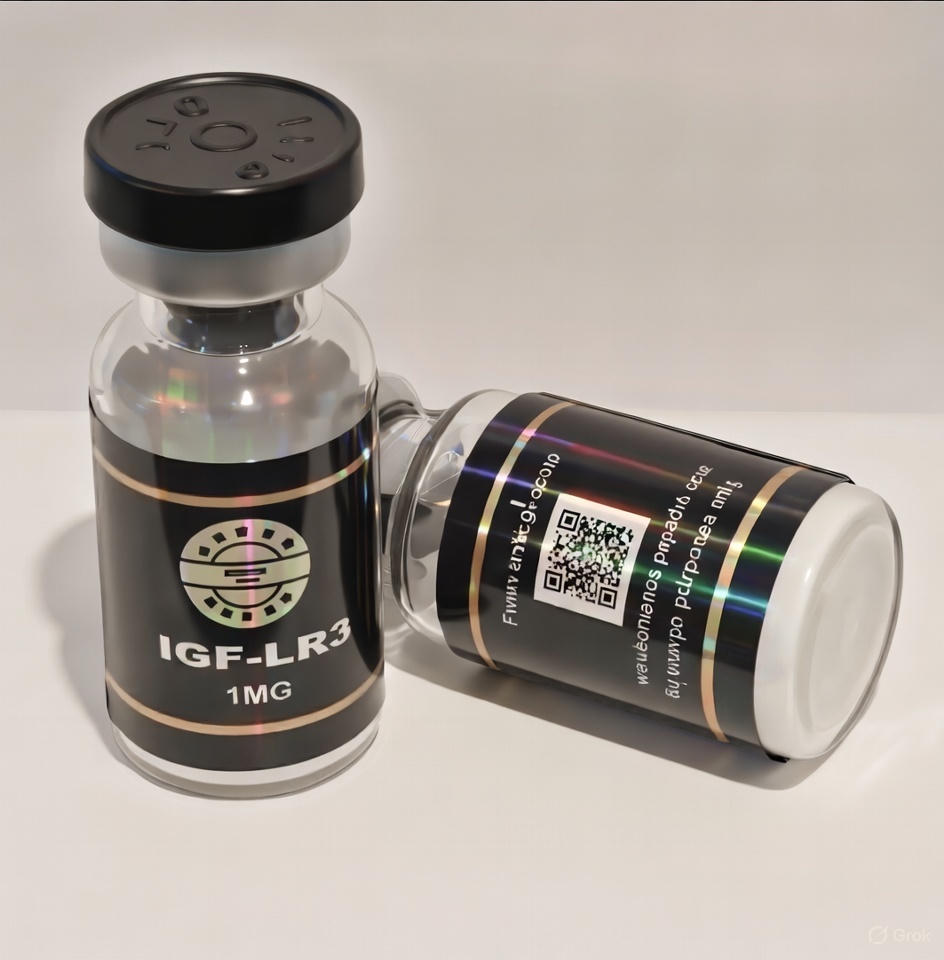
igf1 lr3 bottle
Image source: regenmdwellness
What Does IGF-1 LR3 Do?
At its core, IGF-1 LR3 acts like a messenger that tells your cells to grow, repair, and use nutrients more efficiently. When it binds to IGF-1 receptors, it activates pathways inside the body that stimulate protein building, cell repair, and energy use. This is why it’s often talked about in the context of muscle growth, fat metabolism, and tissue recovery.
It also influences metabolism by improving glucose uptake and encouraging the body to burn fat more efficiently. Some users describe this as a “leaning effect,” though it’s important to frame this carefully: IGF-1 LR3 isn’t a stand-alone weight loss solution, but rather a potential support tool for body composition when combined with lifestyle changes.
In short, IGF-1 LR3 is like a cellular “green light,” nudging the body toward growth and repair. That’s what makes it appealing across fields, from performance recovery to IGF-1 peptide therapy in aesthetic and anti-aging practices. But it’s also why medical supervision is key, anything that pushes cells to grow faster carries both potential benefits and risks.
Please not all information is for research purposes only
Reviews
There are no reviews yet.